
A straight comparison of vibe, sightseeing, weather, food, budget, and who each one actually suits — so you pick the right holiday, not just the nearer one.
Travellers deciding between Dharamshala and Dalhousie often treat them as two versions of the same hill station. They are not. The two towns sit about 120 km apart — a three-to-four-hour drive — and they deliver completely different holidays. One is loud, cultural, and full of cafes, monasteries, and backpackers debating the best thukpa; the other is quiet, green, and built for slow walks under pine trees. If you are coming up from the capital and want the logistics handled before you arrive, a dharamshala tour package from delhi sorts the transfers and stays so you can spend your energy choosing between the two rather than untangling buses and timings.
This guide breaks down Dharamshala vs Dalhousie across everything that actually shapes a trip — the feel of each place, the sightseeing, the weather, the food, the budget, and which type of traveller belongs where. The honest headline: neither is better in the abstract. The mistake is going to one expecting the other.
The Short Answer
If you want culture, food, cafes, trekking, and energy, choose Dharamshala. If you want silence, scenic walks, forest viewpoints, and a slower pace, choose Dalhousie.
Dharamshala suits solo travellers, backpackers, cafe lovers, and anyone drawn to Tibetan culture, monasteries, and the Triund trek. Dalhousie suits families with kids, older travellers, couples after calm, and anyone who simply wants to sit with a view and do very little for two days. And if this is your first time in Himachal and you want the most variety in the least time, Dharamshala gives you more to do per day.
Dharamshala vs Dalhousie: The Core Difference
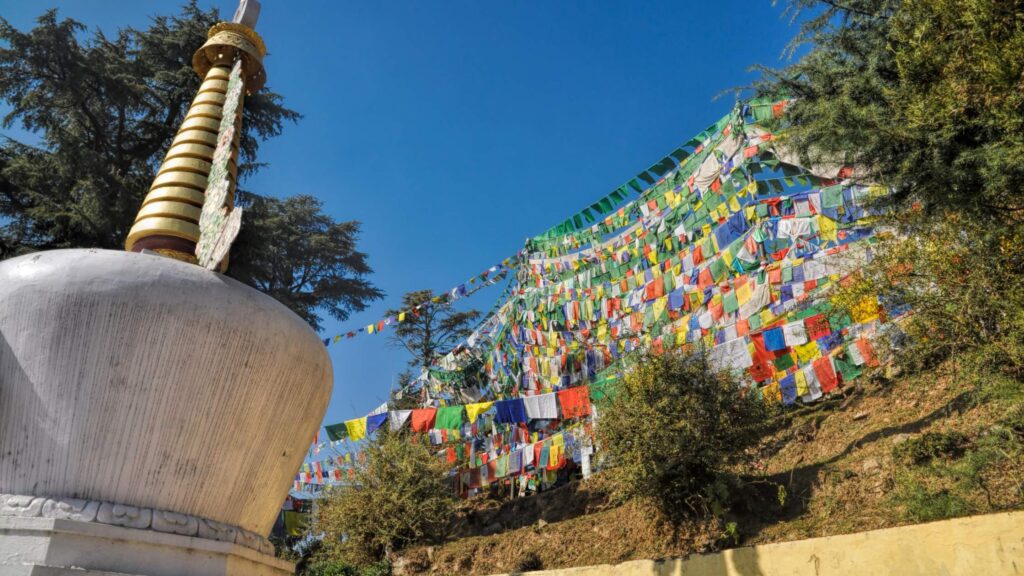
The biggest gap between them is energy. Dharamshala, and the McLeodganj area in particular, feels alive — monks in maroon robes, prayer flags strung across every lane, travellers from everywhere, live music spilling out of cafes, and a constant low hum of activity. It is a place where things happen.
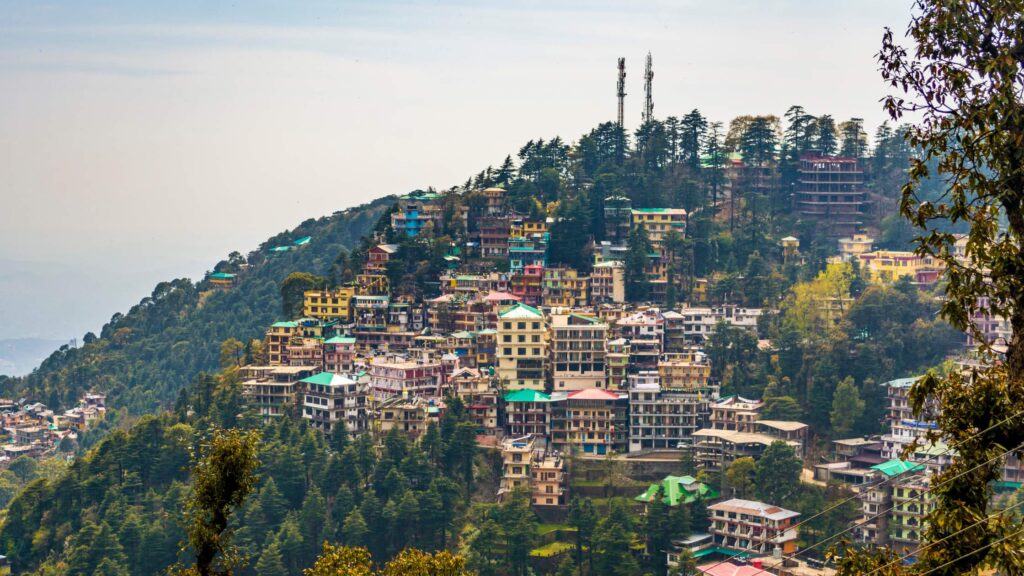
Dalhousie is the opposite. It feels like a hill station from thirty years ago: colonial buildings, pine-lined roads, families strolling after dinner, and shops that shut early. Nothing is rushed, nothing is loud, and that is the entire point.
One thing worth clearing up is the difference between Dharamshala and McLeodganj. Dharamshala is the lower town, at around 1,457 m, home to the HPCA cricket stadium, government offices, and local markets. McLeodganj sits roughly 10 km uphill, and that is where most tourists actually stay. When someone says “I went to Dharamshala,” they usually mean McLeodganj. Dalhousie, meanwhile, is almost always experienced alongside Khajjiar — about 24 km away — and Kalatop Wildlife Sanctuary, with the town itself spread across five hills.
Which Suits Your Kind of Traveller?
For families
For a relaxed family trip, Dalhousie wins. The pace is gentler, the roads inside town are easier, and kids do not have to haul themselves up steep lanes the way they do in McLeodganj. Khajjiar hands families a flat, grassy meadow where children can run while parents sit with chai. Dharamshala offers more variety, but it also asks more of everyone — the steep lanes, the crowded market, and the constant walking can wear out younger kids and older relatives fast. Want activity and variety? Dharamshala. Want a calm, low-effort break? Dalhousie.
For couples and honeymooners
Dalhousie feels more romantic, with quiet pine-forest walks, thin crowds, and peaceful evenings that McLeodganj cannot always promise. Dharamshala gives couples more to do together — cafe hopping, monastery visits, the Bhagsu waterfall walk, sunset viewpoints. The honest split: if you want to talk and simply be together, Dalhousie; if you want to explore and experience things side by side, Dharamshala.
For solo travellers and backpackers
Dharamshala takes this one comfortably. McLeodganj and Dharamkot have a real backpacker scene — hostels, shared dorms, budget cafes, meditation centres, and the Triund trek right on the doorstep. You will meet other solo travellers within hours. Dalhousie lacks that infrastructure; it is more of a family destination, and solo travellers can enjoy it but often feel like the odd one out.
For senior citizens
Dalhousie is kinder on the body. The main areas are relatively flat, much of the sightseeing happens from the car, and walking distances are short. McLeodganj, with its steep lanes and uneven uphill paths, tires out even fit young travellers. Active seniors who are comfortable on hills can manage it, but for most, Dalhousie is the safer pick.
What the Vibe Is Really Like
Dharamshala
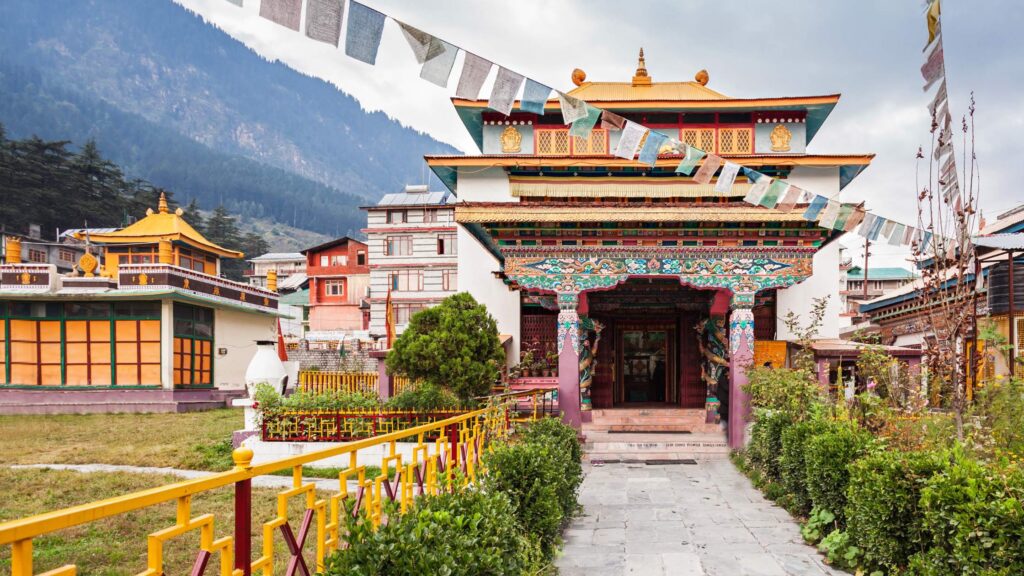
Walk through McLeodganj on any evening and you pass a Tibetan monastery, a Korean cafe, a bookshop full of second-hand novels, a yoga studio, and a group of travellers sharing a rooftop. The smell of momos and thukpa follows you everywhere, and prayer wheels turn at the Dalai Lama Temple complex. The crowd skews young — more backpackers, digital nomads, and couples in their twenties than families with toddlers. The energy is social, cultural, and chaotic in the best way.
Dalhousie
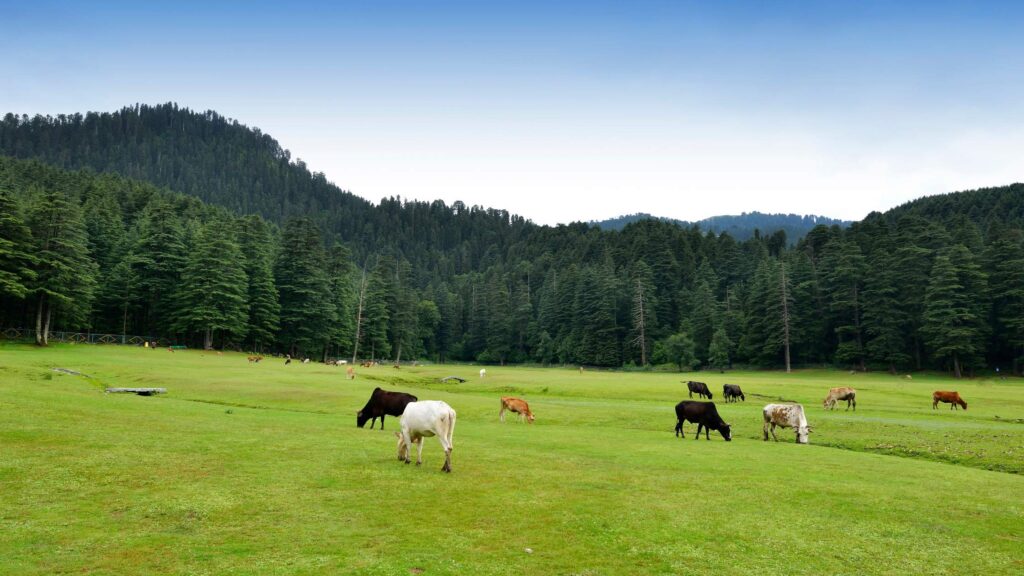
Dalhousie belongs to a different era: old stone churches, British-era bungalows, wide roads lined with deodar and pine, and a town centre where the big evening event is eating maggi on a bench with a view. The common mistake is expecting McLeodganj-level buzz. Dalhousie does not have it, and if you arrive hoping for nightlife and leave calling it “boring,” you simply chose the wrong town. Its beauty is in the slowness.
Which Has Better Sightseeing?
In and around Dharamshala
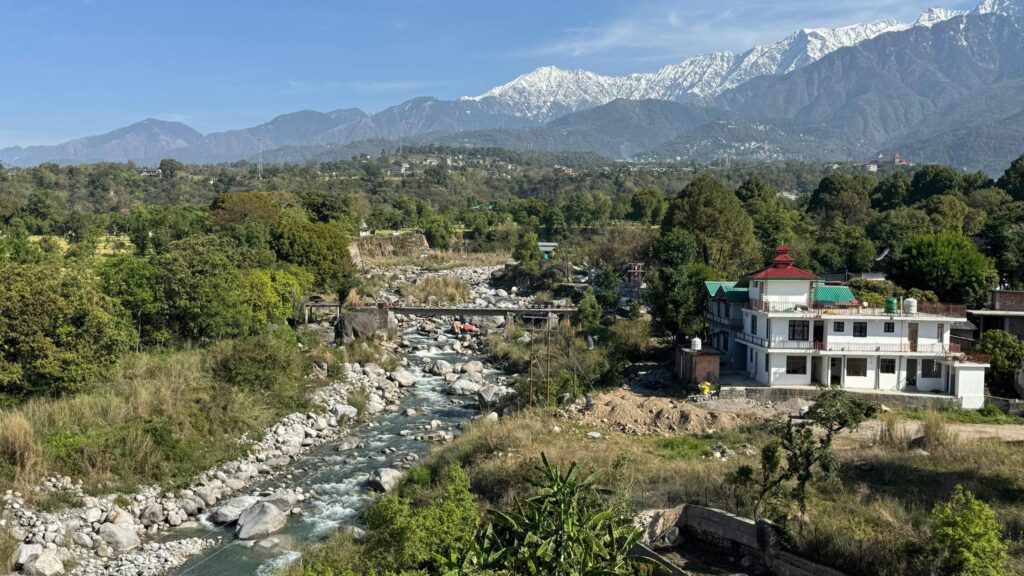
McLeodganj is the base. From here you reach the Dalai Lama Temple complex (the Tsuglagkhang Complex), the spiritual headquarters of the Tibetan government-in-exile and one of the most important Tibetan Buddhist sites outside Tibet. Walk a couple of kilometres further and you hit Bhagsu, with its waterfall and the well-known Shiva Cafe above it. Dharamkot, just above McLeodganj, is where the trekking and yoga crowd gathers; Dal Lake is small and quiet, nothing like the Kashmir version; and St. John in the Wilderness is a lovely stone church among the deodars. The HPCA Stadium in lower Dharamshala is one of the most scenic cricket grounds anywhere.
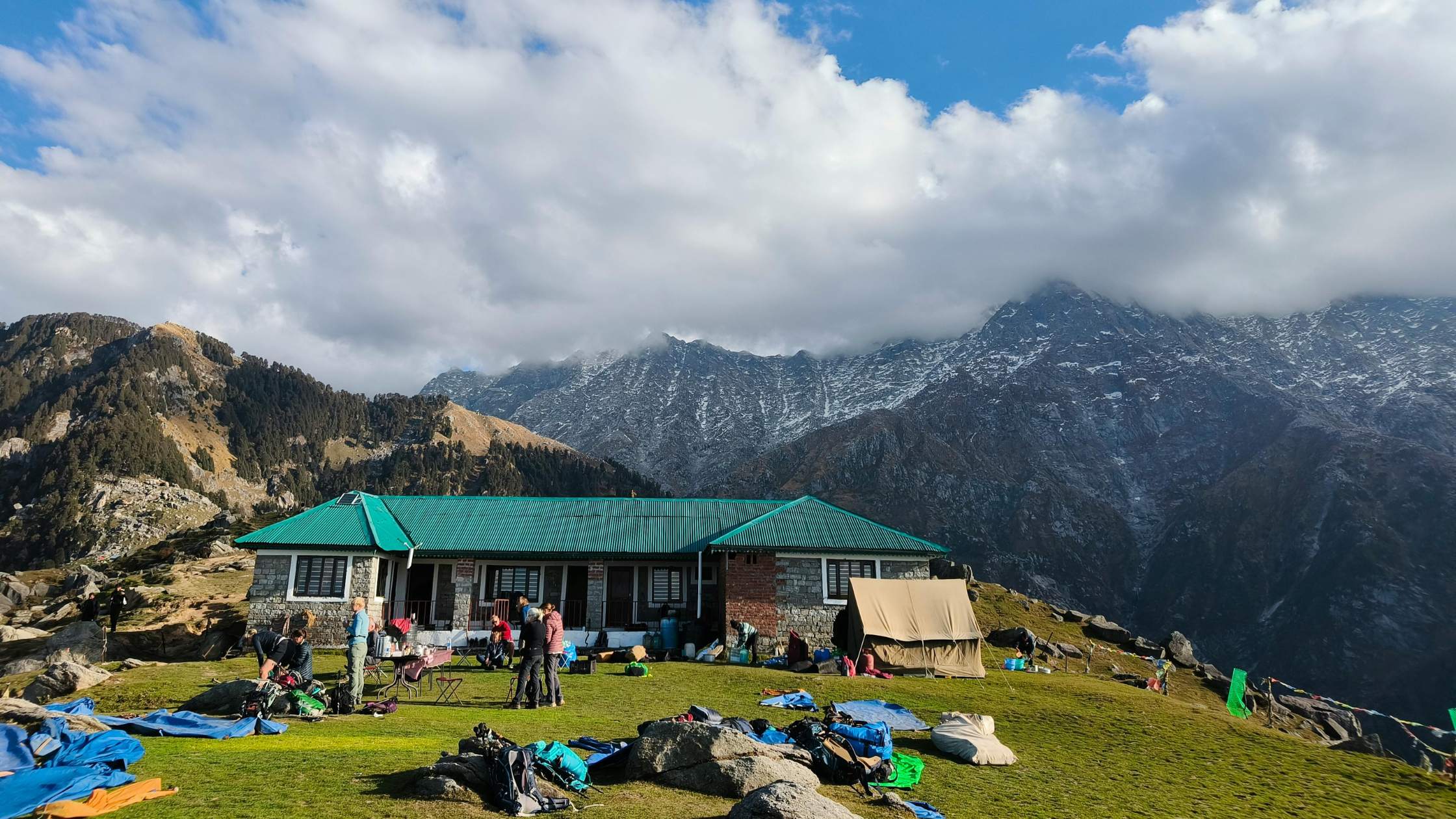
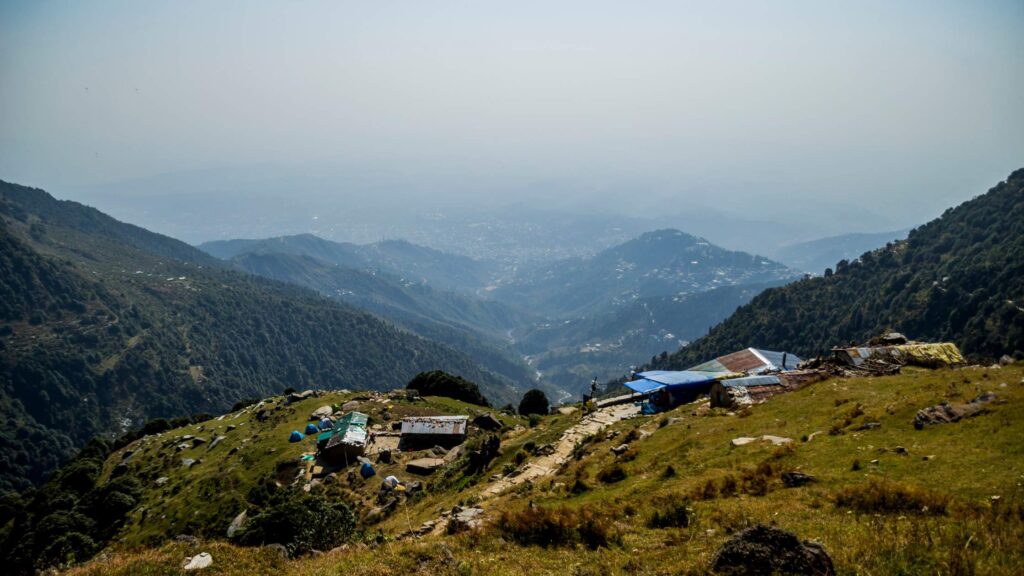
Then there is Triund — the trek that starts near McLeodganj (about 9 km one way, or roughly 6 km from Galu) and climbs to around 2,828 m, where the Dhauladhar range fills the horizon. The season runs March to June and September to November, and there are entry and camping fees that change from time to time, so confirm the current rules locally before you go. Taken together, Dharamshala gives you culture, nature, treks, cafes, and viewpoints in a single trip.
In and around Dalhousie
Khajjiar is the headline — a flat meadow ringed by dense forest, and the spot local drivers will tell you is the finest picnic ground in this part of Himachal. Dainkund Peak, the highest point near Dalhousie, opens up a panoramic view on clear days. Kalatop Wildlife Sanctuary has a beautiful forest trail, Panchpula offers a small waterfall and a memorial, and Gandhi Chowk and Subhash Chowk form the two market hubs linked by the Mall Road. Dalhousie sightseeing is simpler — fewer stops, more scenery, less walking. You trade cultural variety for peaceful forest roads and mountain views you do not have to trek to reach.
Weather and the Best Time to Visit
Summer
Both work well in summer. Dharamshala stays pleasant from February to June, Dalhousie from March to June. Dalhousie sits higher, around 2,000 m against Dharamshala’s 1,457 m, so it feels a touch cooler. Summer travellers wanting a range of activities lean towards Dharamshala; those after a classic cool hill-station break — light jacket, chai on a balcony — lean towards Dalhousie.
Monsoon
Honestly, both get rain, and landslides can block roads. Waterfalls look spectacular but the paths turn slippery; Bhagsu in Dharamshala swells beautifully in monsoon, yet the trail gets treacherous, and the Dalhousie–Khajjiar road can turn tricky after heavy rain. Do not plan a monsoon trip assuming everything runs smoothly — build buffer days and check road conditions before you leave.
Winter and snow
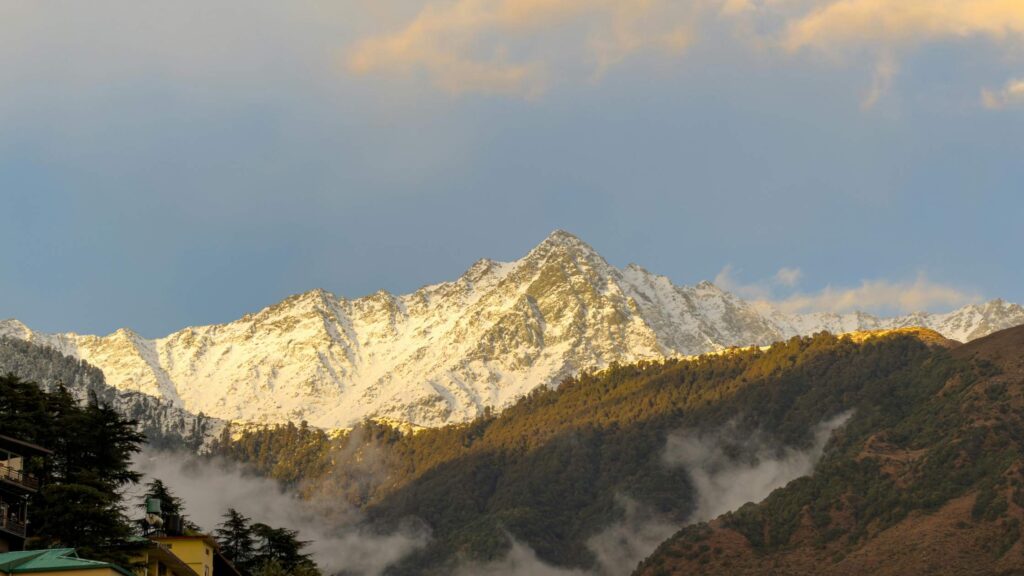
This is where it gets interesting. Both receive snowfall, but differently. Upper Dharamshala — McLeodganj, Dharamkot, the Triund trail — gets good snow in December and January. Dalhousie town and the Khajjiar side also get snow, but the road to Khajjiar can face restrictions after a heavy fall. If snow is the whole point of your trip, either can deliver; just keep Khajjiar flexible in deep winter, because a single big snowfall can cut that road for a day or two.
Which Is Easier to Reach?
Getting to Dharamshala
Gaggal Airport is about 14 km away, and Pathankot is the nearest major railhead. Road access from Delhi, Chandigarh, and Amritsar is well established, with both private and HRTC buses running daily, and ongoing highway upgrades in the region are gradually trimming drive times.
Getting to Dalhousie
The nearest airport is still Gaggal, but it sits about 110 km away. The nearest railhead is Pathankot, roughly 87 km out, and from there you need a further road transfer of two to two-and-a-half hours to reach town.
The verdict on access
Dharamshala is easier to reach. The airport is closer, rail links are more direct, and road infrastructure keeps improving. Dalhousie always tacks on that extra road leg once you land or step off the train.
Food, Cafes, and Markets
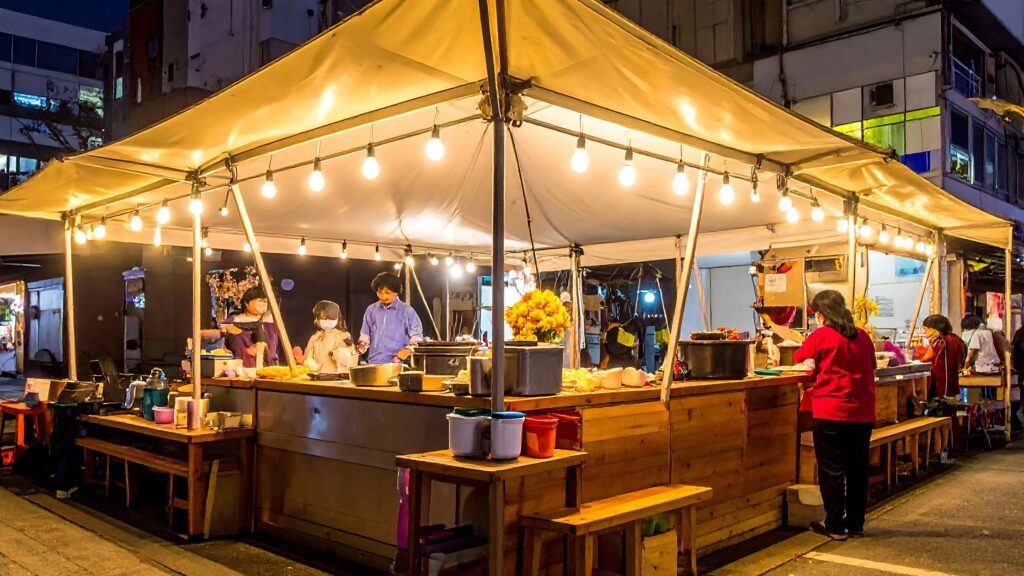
This one is not close — Dharamshala wins for anyone who travels on their stomach. McLeodganj has Tibetan kitchens serving momos, thukpa, and thenthuk on practically every lane, alongside Italian cafes, Korean spots, Israeli places, and a bakery scene that grows each year. The local tip: skip the tourist-trap restaurants on the main Temple Road that charge double for what the lanes below serve, and look for the small Tibetan kitchens with a queue rather than a signboard.
Dalhousie keeps it simple — North Indian restaurants, decent maggi stalls, and a few bakeries. Nothing bad, nothing remarkable. The markets follow the same pattern: McLeodganj’s is dense and colourful, packed with Tibetan handicrafts, singing bowls, prayer flags, and second-hand books, while Dalhousie’s are calm and functional, mostly for everyday shopping and souvenirs. If food is a major part of your trip, Dharamshala is the clear winner.
How Many Days Do You Need?
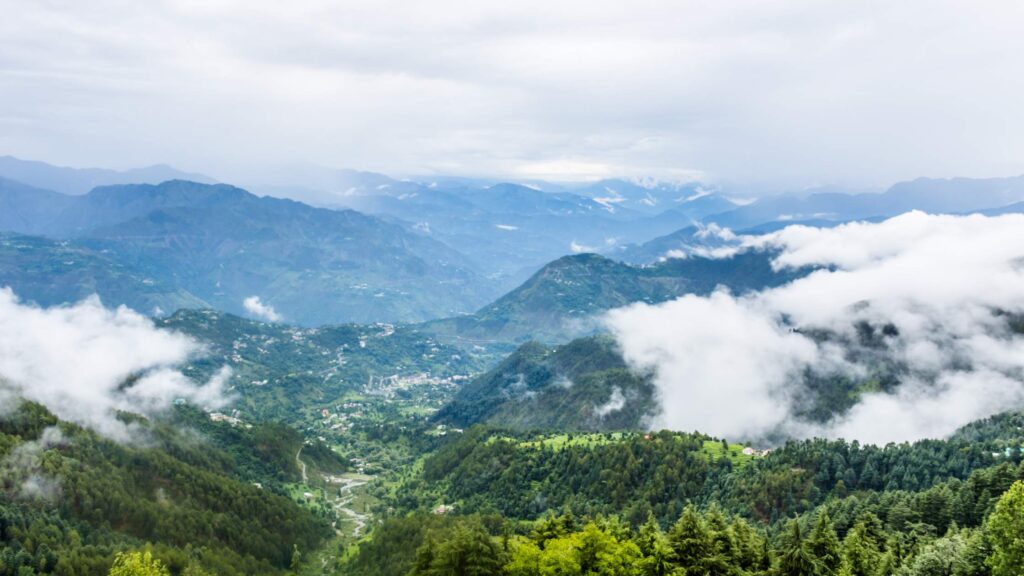
Two days in Dharamshala give you a taste but not the full picture — you can cover the Dalai Lama Temple, Bhagsu, a cafe trail, and the market, but you will miss Triund entirely. Two days in Dalhousie, by contrast, actually feel complete; the town’s pace matches a shorter trip, and Khajjiar, Kalatop, and a Mall Road evening round it off nicely.
Because the two are about 120 km and roughly three hours apart, combining them makes sense if you have four to five days — two nights in Dharamshala, two in Dalhousie, with a travel day between. That combo is ideal for first-time Himachal visitors who want both styles. It does not work on a three-day trip, where the travel day simply eats your holiday.
Which Is Better on a Budget?
Dharamshala has more budget options. McLeodganj and Dharamkot are full of hostels, shared dorms, and cheap guesthouses that Dalhousie largely lacks, and you can eat well for very little at Tibetan eateries while shared transport keeps movement costs down. Dalhousie is not expensive, but its stays lean towards mid-range hotels and family guesthouses, so budget solo travellers find fewer options built for them. Your actual spend depends on hotel, season, and how you get around — but in general, a backpacker stretches money further in Dharamshala.
The Honest Verdict
Choose Dharamshala if you are new to Himachal, travelling solo, a cafe lover, drawn to Tibetan culture, a trekker eyeing Triund, or simply someone who gets restless sitting still. Choose Dalhousie if you want a slow family break, a quiet couples’ trip, scenic rest without effort, a peaceful base for Khajjiar, or a hill station where you can actually hear birds instead of traffic.
Neither is better in absolute terms. They are different holidays, and the only real error is arriving at one while expecting the other.
Can You Combine Both in One Trip?
Yes, and it is a popular plan. The drive between them runs about three hours, easy as a half-day transfer. A clean five-day route: arrive into Dharamshala and spend the first two days on McLeodganj, Bhagsu, and the monastery circuit; drive to Dalhousie on the morning of day three; cover the town, Khajjiar, and Kalatop across days three and four; then head out via Pathankot on day five, or continue to Amritsar. Just do not attempt the combo on three days — you will spend too long in the car and too little time anywhere.
A Few Tips Before You Decide
Weekends transform both places: McLeodganj on a Saturday night feels like a mini Goa, and Dalhousie fills with Punjab families. If you can travel midweek, do — the experience at both is noticeably better. Remember that McLeodganj means serious walking on steep slopes, so factor in anyone with knee trouble or low stamina before settling on Dharamshala. Keep a backup activity in Dalhousie town in case winter snow closes the Khajjiar road without warning. And bear in mind that quiet does not always mean easier — Dalhousie has fewer restaurants, fewer transport options after dark, and less flexibility if something goes wrong, whereas Dharamshala’s greater infrastructure makes problems easier to solve. One last thing: reach Bhagsu waterfall before 7 AM if you can. The trail is empty, the light is soft, and the pool is yours — by 10 it is a queue of selfie sticks.
Frequently Asked Questions
Which is better, Dharamshala or Dalhousie?
It depends on what you want. Dharamshala gives you more culture, food, and activity; Dalhousie gives you more peace, scenery, and rest. Neither is universally better.
Is Dalhousie better for families or couples?
It works well for both. Families enjoy Khajjiar and the relaxed pace; couples enjoy the quiet evenings and scenic walks. It suits anyone wanting a calm trip.
Is Dharamshala better for solo travellers?
Yes. McLeodganj and Dharamkot have hostels, cafes, and a backpacker community, so solo travellers find it much easier to meet people and keep costs low.
Which place is colder, Dalhousie or Dharamshala?
Dalhousie sits higher, around 2,000 m against Dharamshala’s 1,457 m, so it generally feels colder, especially at night. Upper McLeodganj and Dharamkot can match it, though.
Which is better for snowfall?
Both get snow in December and January — Dalhousie and upper Dharamshala (the McLeodganj area) alike. The Dalhousie–Khajjiar road can face restrictions after heavy snow, so plan with flexibility.
How many days are enough for Dharamshala and Dalhousie?
Two to three days for each, or four to five days if you combine both in one trip.
Can I cover Dharamshala and Dalhousie in one trip?
Yes. They are about 120 km apart with a three-hour drive, and a five-day trip works well for the combo.
Which is cheaper, Dharamshala or Dalhousie?
Dharamshala has more budget options, especially for solo travellers and backpackers. Dalhousie’s stays lean more mid-range. Overall costs depend on your choices.
Which has better food and cafes?
Dharamshala, easily — Tibetan food, international cafes, bakeries, and a lively street-food scene. Dalhousie has simpler North Indian food and fewer cafes.
Which is more peaceful, Dharamshala or Dalhousie?
Dalhousie. It is quieter, less crowded, and slower-paced, while Dharamshala (especially McLeodganj) is busier and more social.
Which is better in summer?
Both are good. Dharamshala gives you more to do; Dalhousie offers a cooler, more classic hill-station feel.
Which is better in monsoon or winter?
In monsoon both face rain and possible road issues, so neither is ideal for a stress-free trip. In winter both get snow, but Dharamshala has better infrastructure and more fallback options if roads close briefly.